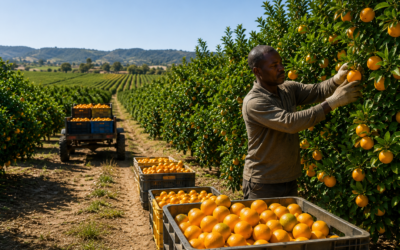
In some parts of South Africa’s agricultural sector, some farmers are adjusting how they use synthetic fertilisers and crop protection chemicals.
The shift is gradual rather than uniform, and is being driven by a small number of practical pressures.
1. Rising input costs
One of the main reasons is cost. Fertiliser, crop protection products, and other chemical inputs have become very expensive over recent seasons. For many producers, these inputs make up a large portion of total production costs.
As prices increase, farmers are forced to rethink how much reliance they can realistically place on chemical-based systems. In some cases, this has led to reduced application rates, while in others it has encouraged trial use of biological alternatives to supplement or partially replace conventional inputs.
Biological farming is often considered in this context because it offers the potential to reduce long-term dependence on high-cost synthetic inputs by improving soil function over time.
2. Regulatory and market pressure
Another factor is tightening regulatory and market requirements, particularly around chemical residues in export crops. Export markets are placing increasing scrutiny on maximum residue levels (MRLs) and production practices, which places pressure on growers to manage chemical use more carefully.
This does not always mean eliminating chemicals, but it does encourage more controlled and reduced application strategies, as well as greater interest in integrated and biological approaches that can lower reliance on synthetic crop protection.
Research and industry analysis shows that compliance requirements and sustainability standards are becoming more important in agricultural value chains, influencing how inputs are selected and managed.
3. Soil health
Some farmers are also responding to concerns about soil condition. Continuous chemical use without sufficient biological replenishment can, over time, affect soil structure and biological activity.
In response, there is growing interest in practices that support soil health, including the use of composts, microbial products, cover crops, and crop rotation systems.
These methods are aimed at improving water retention, nutrient cycling, and overall soil resilience. The goal in many cases is not to eliminate chemical inputs entirely, but to improve efficiency so that less is needed over time while maintaining yield stability.
4. Risk management
Weather variability is also influencing decision-making. Irregular rainfall patterns and more frequent stress periods make crop performance less predictable, which increases the importance of soil systems that can buffer against shocks.
Some farmers are incorporating biological practices as part of broader risk management strategies. Healthier soils can improve moisture retention and reduce vulnerability to short-term climate stress, which helps stabilise production outcomes.
Shift is gradual
Despite these pressures, chemical inputs remain central to most farming systems. The current trend is not a replacement of conventional agriculture, but a gradual adjustment in how inputs are combined and used.
In many cases, biological products and practices are being introduced alongside existing chemical programmes rather than replacing them entirely. This blended approach reflects both caution and practicality as farmers test what works under local conditions.
Export standards continue to reinforce this shift, but adoption remains uneven and dependent on crop type, region, and farm system.