South African citrus exporters could soon send fruit to China more efficiently after changes to export rules reduced some of the cold treatment requirements previously applied to shipments entering the market.
The amendment, announced by Agriculture Minister John Steenhuisen, is expected to lower costs, improve export processes and strengthen access to one of South Africa’s most important agricultural markets.
The adjustment relates to cold treatment protocols, measures used to protect importing countries against pests and plant diseases. While technical in nature, such requirements can influence transport costs, shipping timelines and how quickly produce reaches consumers.
For South African growers, the impact could stretch far beyond export paperwork.
Why it matters for farmers and rural economies
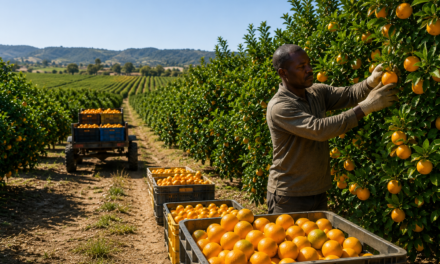
Citrus remains one of South Africa’s largest agricultural export industries and supports an extensive value chain involving farms, packhouses, logistics operators and export services.
According to the Department of Agriculture, exports to China and Hong Kong reached approximately 11.5 million cartons in 2025, accounting for around six percent of South Africa’s total citrus exports. Industry leaders continue to identify significant room for growth as demand expands.
The latest development also follows recent progress in agricultural trade between South Africa and China, including expanded market access for products such as peaches, nectarines, apricots and plums.
The Citrus Growers’ Association of Southern Africa estimates that Southern Africa exported around 204 million cartons of citrus during 2025, with South Africa contributing approximately 193 million cartons. Export earnings exceeded US$2 billion for the first time.
A sector with reach beyond farms
The citrus industry supports roughly 140,000 direct jobs at farm and packhouse level, with additional employment linked to transport, storage and export services.
“These agreements are the result of trust, respect and sustained cooperation, and they are helping open doors for our producers at a time when diversification has never been more important,” said John Steenhuisen, South Africa’s Minister of Agriculture, in a statement.
For many rural communities, export growth carries effects beyond agriculture. Greater market access can support investment, strengthen supply chains and create opportunities in regions where farming remains a major economic driver.